Hania Rani Wins the European Film Award – a Report from an Exceptionally Champagne-Fueled Gala (ENG)

Hania Rani Wins the European Film Award – a Report from an Exceptionally Champagne-Fueled Gala (ENG) - okładka
Maciej Wawrzyniec Olech | 19-01-2026 r.

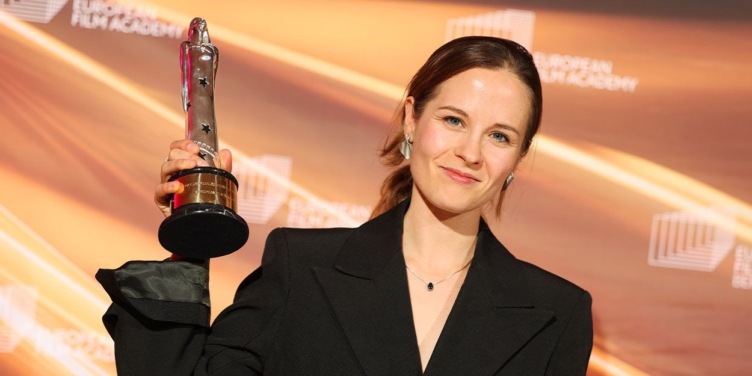
During the ceremonial 38th European Film Awards gala in Berlin, Hania Rani was honored with the prestigious award for Best Original Score. The Polish pianist and composer received the statuette—often referred to as the European Oscar—for her soundtrack to the film Sentimental Value, which proved to be one of the most frequently awarded productions of the evening. It was a night celebrating European cinema in an atmosphere clearly conducive to numerous toasts.

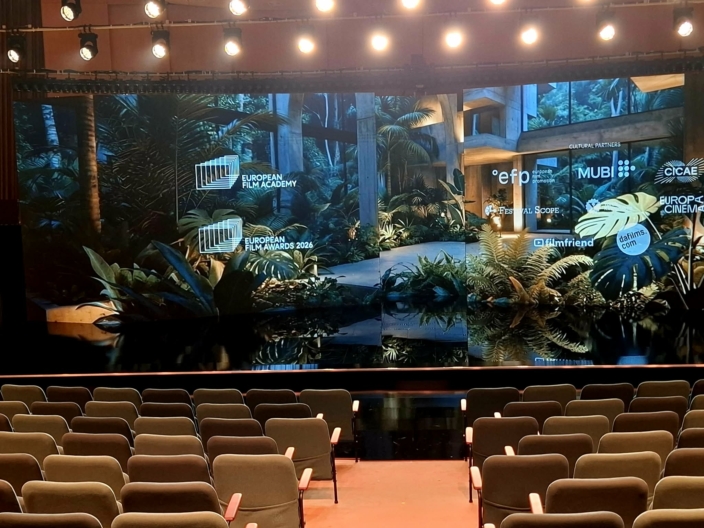
We now know the winners of the 2026 European Film Awards. The official ceremony took place at the Haus der Kulturen der Welt in Berlin and brought together some of the most prominent figures in European cinema. Among the Polish representatives were Hania Rani, as well as Agnieszka Holland. The European Film Awards (EFA) are decided by 5,400 members of the European Film Academy and are often described as Europe’s equivalent of the Academy Awards.

 The Film Gala

The biggest winner of the 38th European Film Awards turned out to be the Norwegian film Sentimental Value, directed by Joachim Trier. The production had previously received one of the top prizes at the Cannes Film Festival and is considered a strong contender for the upcoming Academy Awards. At the European Film Awards, Sentimental Value won a total of six awards: Best Film, Director, Screenplay, Lead Acting Performances (Renate Reinsve, Stellan Skarsgård), and Best Original Score, composed by Hania Rani (more on that shortly).

The gala began punctually—after an approximately ten-minute delay. It took some time for all guests to take their seats and collect their orders from the bar, which many brought with them into the auditorium. Once everyone had settled in, the lights dimmed and acclaimed Iranian director Jafar Panahi took the stage. His film It Was Just an Accident had been awarded the Palme d’Or in Cannes.

Panahi spoke about the protests in his home country, which many describe as a revolution. He addressed their brutal suppression by the Islamic regime and emphasized the importance of resistance. He highlighted the role of filmmakers and artists in speaking the truth, stressing that silence—or neutrality—toward crimes is a form of quiet consent, even complicity. It was an important speech in the context of Iran’s tragic current situation, but also a broader appeal to the film community—many of whom readily comment on global events while displaying a curious restraint when it comes to the Islamic Republic of Iran.

It is difficult to say whether this appeal resonated with the audience—especially since a noticeable group of attendees used this first speech as an opportunity to discreetly leave the auditorium and head to the bar for a few percentage points of refreshment. Unfortunately, this migration became a recurring feature of the evening. Throughout the ceremony, there were rarely long queues at the bar, and many guests took full advantage of that fact. This did not make things easier for those responsible for running the event, including the live broadcast. Staff had to discreetly and subtly stop guests entering and leaving the hall with wine glasses and beer bottles, ensuring they did not walk into camera shots or block presenters on their way to the stage.

For many people in the film industry, remaining seated for an hour and a half—or two—proved surprisingly difficult. Equally challenging seemed to be understanding how a film camera works and when one is inadvertently walking into its frame—not that these individuals deal with such equipment professionally. There were also moments bordering on the absurd, such as when one filmmaker decided to go to the bar precisely while awards were being announced in a category in which his own film was nominated. Fortunately, thanks to the intervention of the ceremony staff, he managed to return to the auditorium just in time.

The first part of the gala concluded with the presentation of a Lifetime Achievement Award to Liv Ullmann. As this was the final award before the intermission, many guests left the auditorium during the legendary actress’s speech in order to secure their place in line at the bar before the crowds arrived.

This year, the editorial team of Filmmusic.pl had the opportunity to attend the event and witness Hania Rani receiving this prestigious award live. Unlike this year’s Golden Globes, the music category was not removed from the live broadcast. That does not mean, however, that everything went smoothly. Unfortunately, certain long-standing prejudices were once again confirmed—namely that not everyone in the industry treats film music as an equal component of cinema. We will return to this issue later in the report, where we will naturally focus on the music category and Hania Rani’s victory, as well as other significant aspects of this year’s gala.
Hania Rani and Music at the European Film Awards

The second half of the gala was expected to deliver—especially for us—the most interesting category: Best Original Score. For the record, the nominees this year were:

  • Jerskin Fendrix – Bugonia
  • Hania Rani – Sentimental Value
  • Michael Fiedler, Eike Hosenfeld – Staring at the Sun

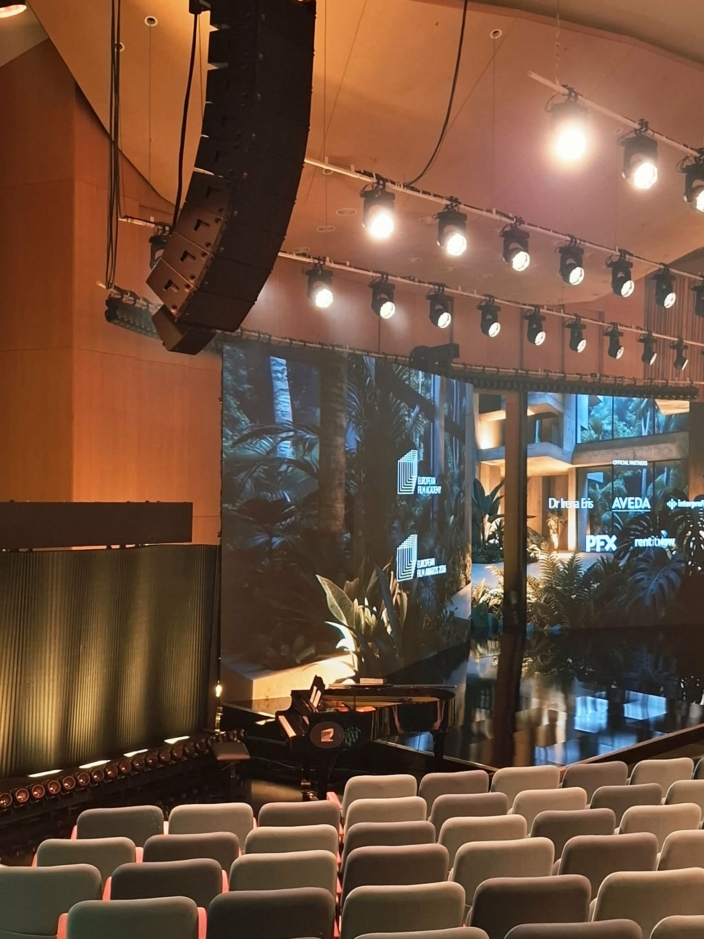
 As mentioned earlier, unlike at this year’s Golden Globes, the music category was broadcast live. The presentation itself turned out to be particularly engaging. The award was presented by Dascha Dauenhauer, composer and recipient of the 2020 European Film Award for Berlin Alexanderplatz. She crossed the entire auditorium to sit at a piano placed on the stage and, while speaking about the three nominated scores, performed excerpts from each of them live.

The rest is history—Hania Rani won the European Film Award for her music to Sentimental Value. The composer did not hide her joy and emphasized how meaningful it was for her to receive the award in Berlin, the city where she studied. In her acceptance speech, she also addressed directors directly:

“For the first time, it was a director whose films I know and love who came to me. I encourage other directors to also choose women composers.”

Her words were met with great enthusiasm from the audience. The remainder of the evening brought further triumphs for Sentimental Value, including victory in the most important category—Best Film. There is no doubt that Hania Rani’s contribution played a significant role in the success of Joachim Trier’s film.

For the Polish pianist and composer, this is one of the most important international accolades of her career to date. Known for both her solo albums and her work in film and theatre, she has consistently built her position on the European music scene for years. The Berlin award only confirms her strong standing as one of the most respected composers of the younger generation—also in the field of film music, which forms an important part of her artistic output.

The last—and so far only—Polish composer to be honored by the European Film Academy before Hania Rani was Paweł Mykietyn, who received the award in 2022 for his score to EO by Jerzy Skolimowski. Although Poland boasts many outstanding and talented film music composers, they are rarely awarded or widely recognized abroad. All the more reason to appreciate Hania Rani’s international success.

Fans of film music certainly will. The question remains whether a larger part of the film industry will follow suit. After this gala, doubts once again arise as to whether film music is still being treated as a secondary element.

During the second half of the ceremony as well, many guests continued to leave the auditorium only to return with freshly filled glasses and bottles. Unfortunately, for many, the music category turned out to be the “perfect moment” to step out for a while. Some even returned with drinks while Dascha Dauenhauer was playing the piano. In conversations with the event staff, it was argued that this was the ideal time, as the cameras were focused on the stage anyway. Arguments that slamming doors disturbed the performance were not convincing to everyone. There were even comments such as (quote): “it’s ONLY a music award, not Best Film or Actor,” and therefore—according to some—not worth worrying about.

After the Gala, Before the Soundtrack Premiere

The presentation of the Best Film award to Sentimental Value officially concluded the televised part of the 38th European Film Awards. That did not, however, mark the end of the evening. While staff were tidying up the main hall of the Haus der Kulturen der Welt and clearing away empty bottles and glasses, a large afterparty celebrating European cinema began in other parts of the building and continued until four in the morning.

Will Hania Rani have more reasons to celebrate in this still-young year? Does winning a European Oscar give her a chance at the American one? Unfortunately, no—although Sentimental Value appeared on the Oscar shortlists published in December, the film did not make it into the Best Original Score category. Even without an Academy Award from across the ocean, the Berlin success will undoubtedly introduce the Polish pianist and composer’s work to an even wider audience.

The official soundtrack to Sentimental Value will be released on January 30 by Gondwana Records. According to the artist, the album will also receive physical releases on vinyl and CD. The Polish theatrical premiere of Sentimental Value (Affeksjonsverdi), directed by Joachim Trier, is scheduled for February 27, 2026.

In closing, we once again congratulate all the winners of the 38th European Film Awards—especially Hania Rani. And to our readers, a final reminder: listen to film music, and drink responsibly.

Najnowsze artykuły

Komentarze

Jeżeli masz problem z załadowaniem się komentarzy spróbuj wyłączyć adblocka lub wyłączyć zaawansowaną ochronę prywatności.